
From the fabric roll to the finished cover
Fabric to finished cover in our own group plants, plus injection moulding. Each step is also available on its own as job work.
Step 1
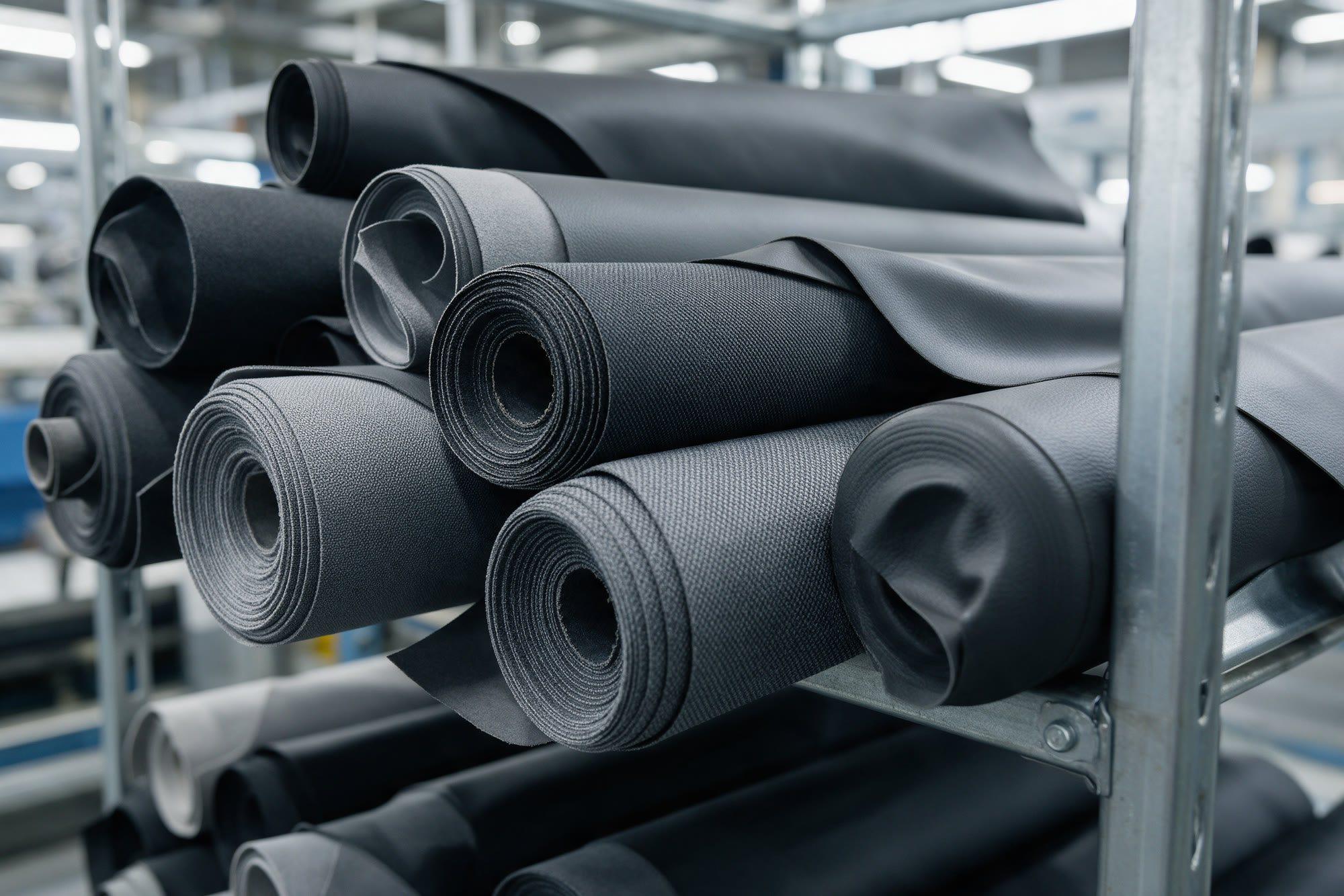
Fabric and PVC
Face fabrics and PVC made in the group: PVC in any colour with properties set for the application, cost-effective tricots and special-purpose nylon.
It is the first link in a turnkey chain that runs from fabric and PVC to cutting and sewing.
- Leather
- PVC
- PU
- Woven fabrics
- Air bag fabrics
- Warp knitted fabrics
- Circular knitted fabrics
- Mesh fabrics
- Spacer fabrics
- Suede fabrics
- Raised fabrics
Used in
- Seating
- Door pads
- Console arm rests
- Sun visor
- Dashboard
- Gear boot
- Steering
- Chairs and furniture
Step 2
Lamination
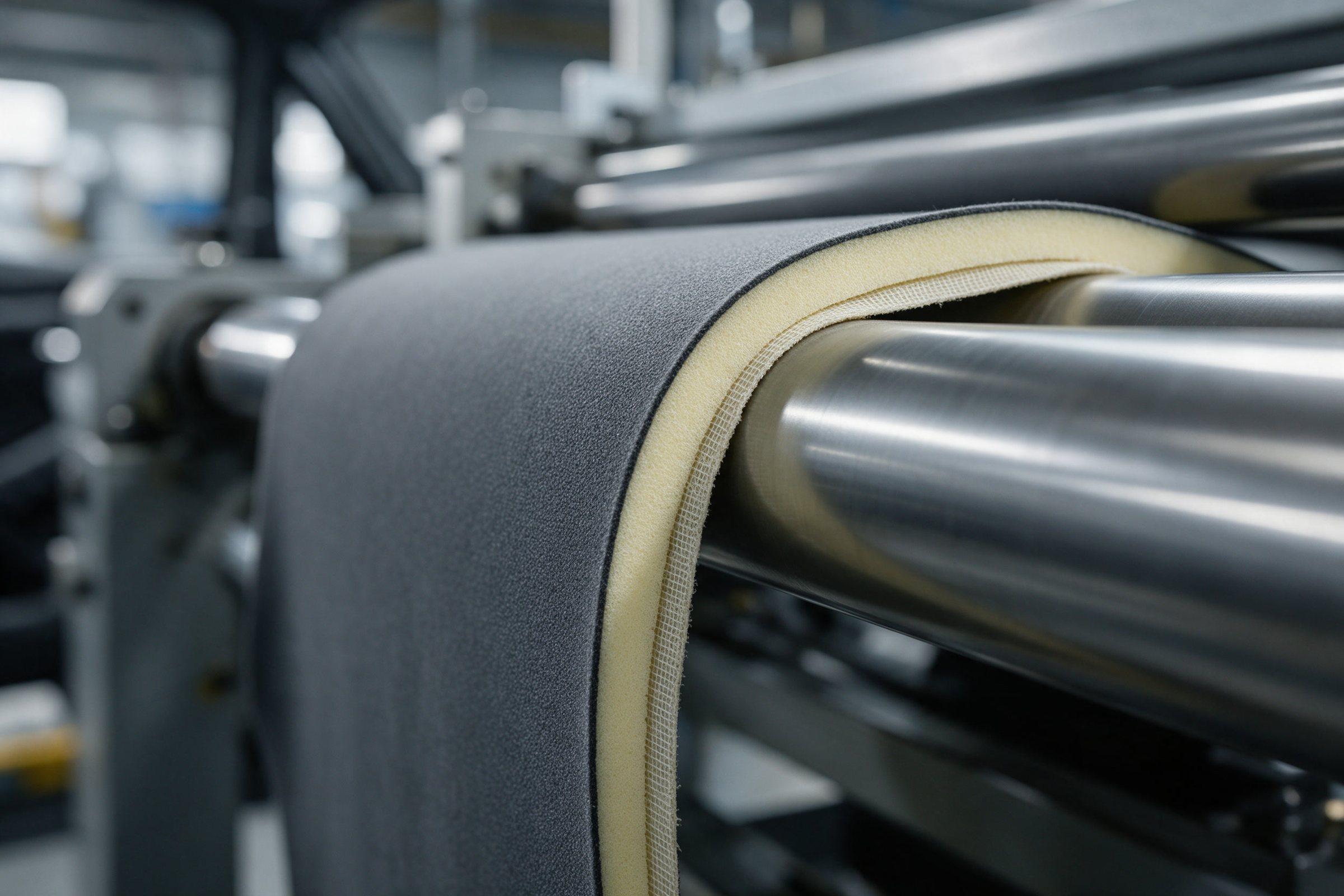
Flame lamination of PU foam to fabric and PVC: thickness-controlled and breathable foams for seat covers, softness tuned for interior covers.
Seat-cover laminates use PU foams with thickness control or breathable foams; interior-cover laminates are tuned for softness and handle.
- Flame lamination
- Hot melt lamination
- PUR lamination
Step 3
Post-Processing
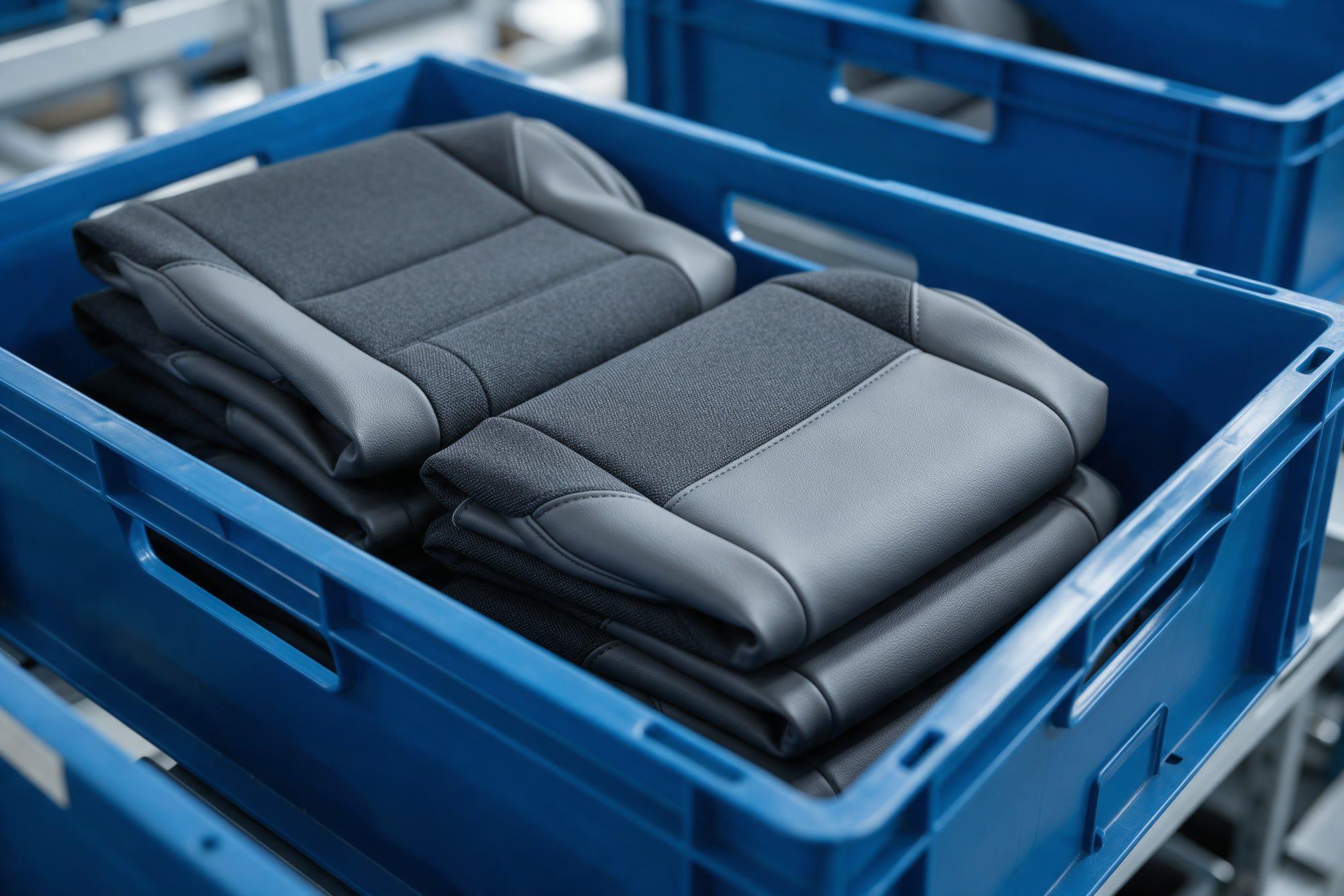
Sub-assembly and semi-covering work, so covers arrive at the seat line ready to fit.
Seat trim sub-assembly stitching and semi-covering take work off the customer's seat line.
- Seat trim sub-assembly stitching
- Semi-covering
- Partial cut and sew
- Punching
- Embossing
- Welding
Step 4
Cutting
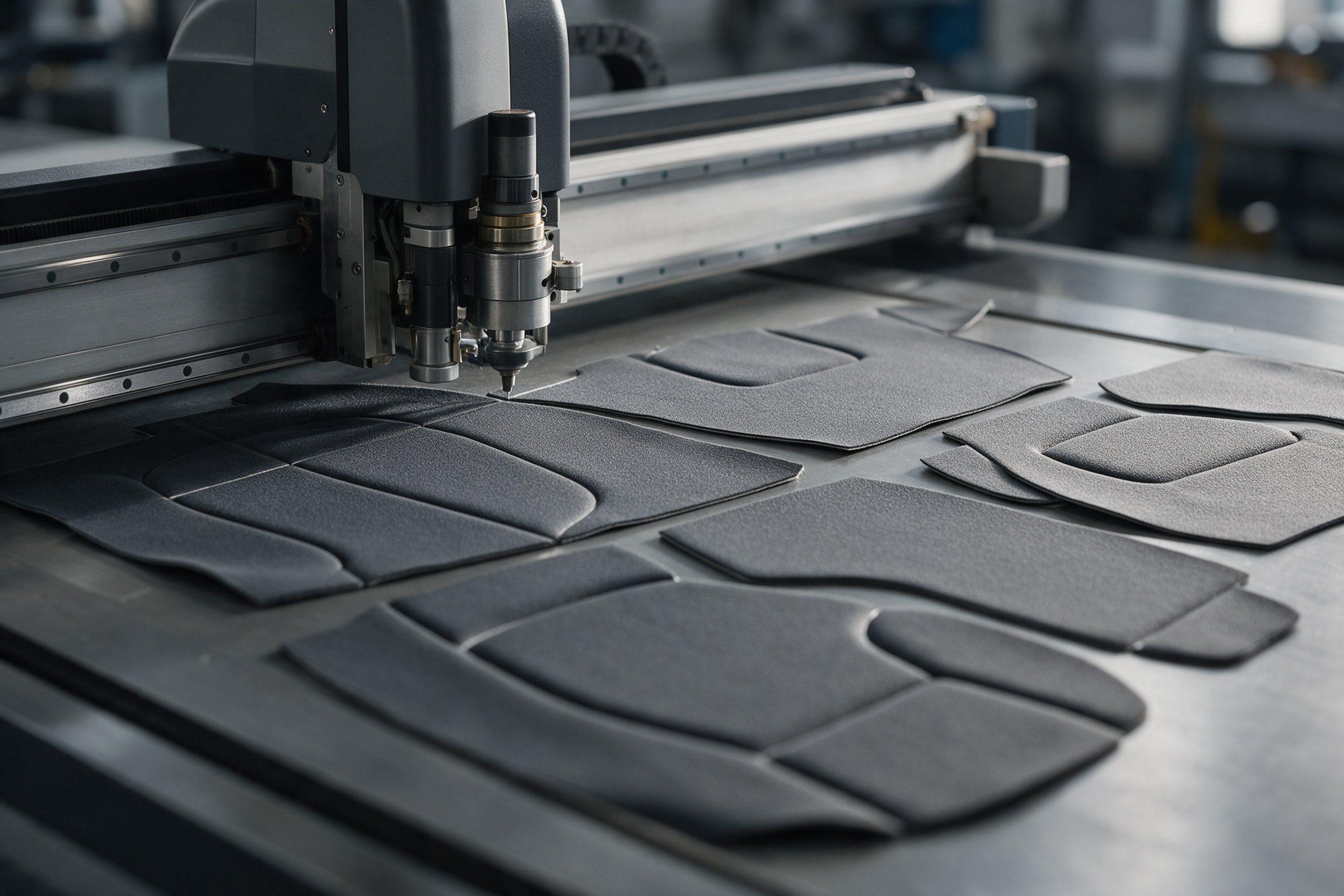
Laminated material cut to the customer's pattern, with the method chosen for the part and the volume.
CNC cutting handles pattern changes and mixed variants; die and press cutting handle high-volume repeat panels.
- CNC cutting
- Hydraulic cutting
- Laser cutting
- Pneumatic cutting
- Cam cutting
- Die cutting
Step 5
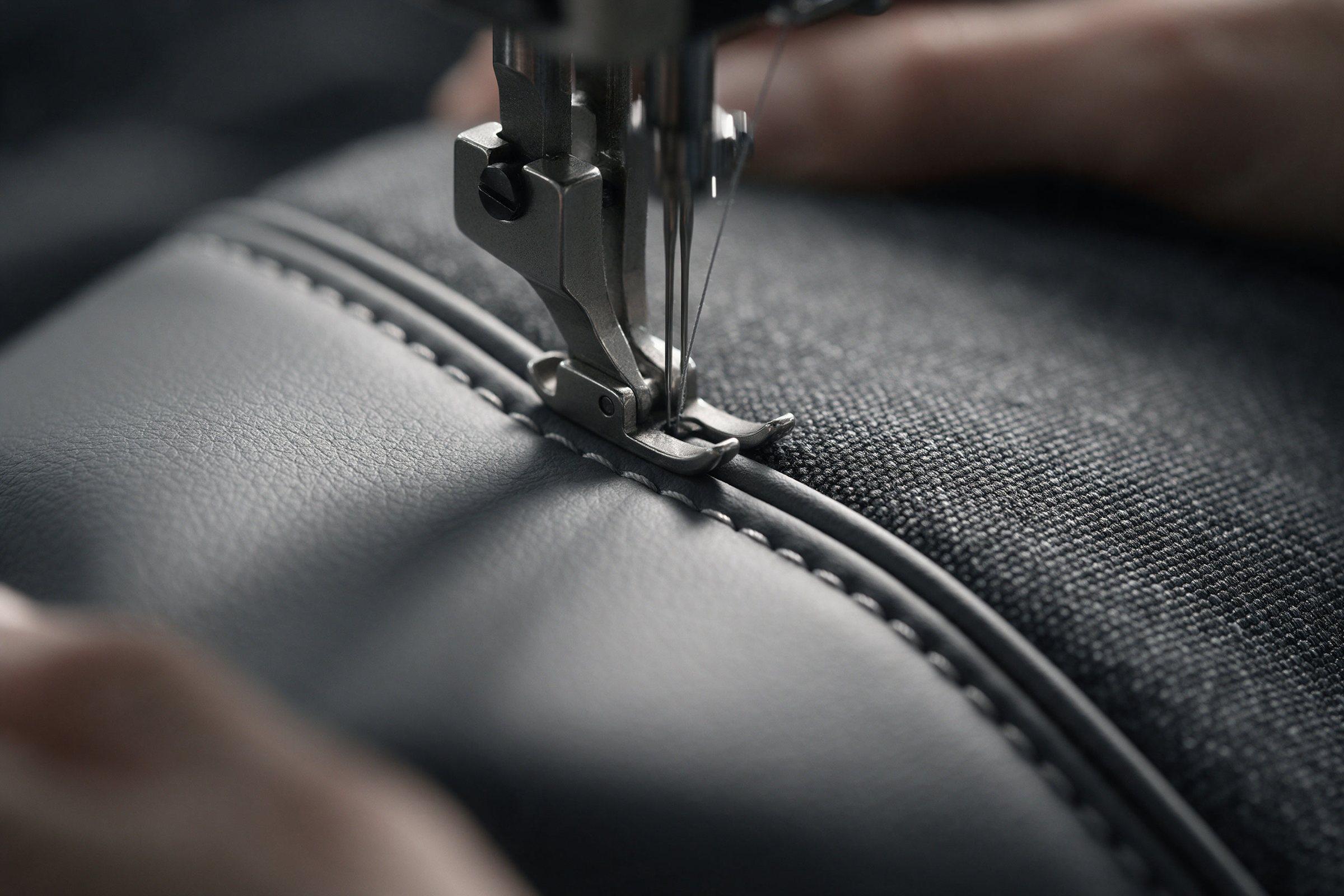
Sewing
Seat trims and arm rest trims sewn in volume.
Dedicated sewing and inspection sections run per customer program, so each cover is sewn and checked against that customer's standard.
- Seam stitching
- Single pointed stitching
- Double pointed stitching
- Quilting
- Embroidery
- CNC stitching
- Overlock stitching
Step 6
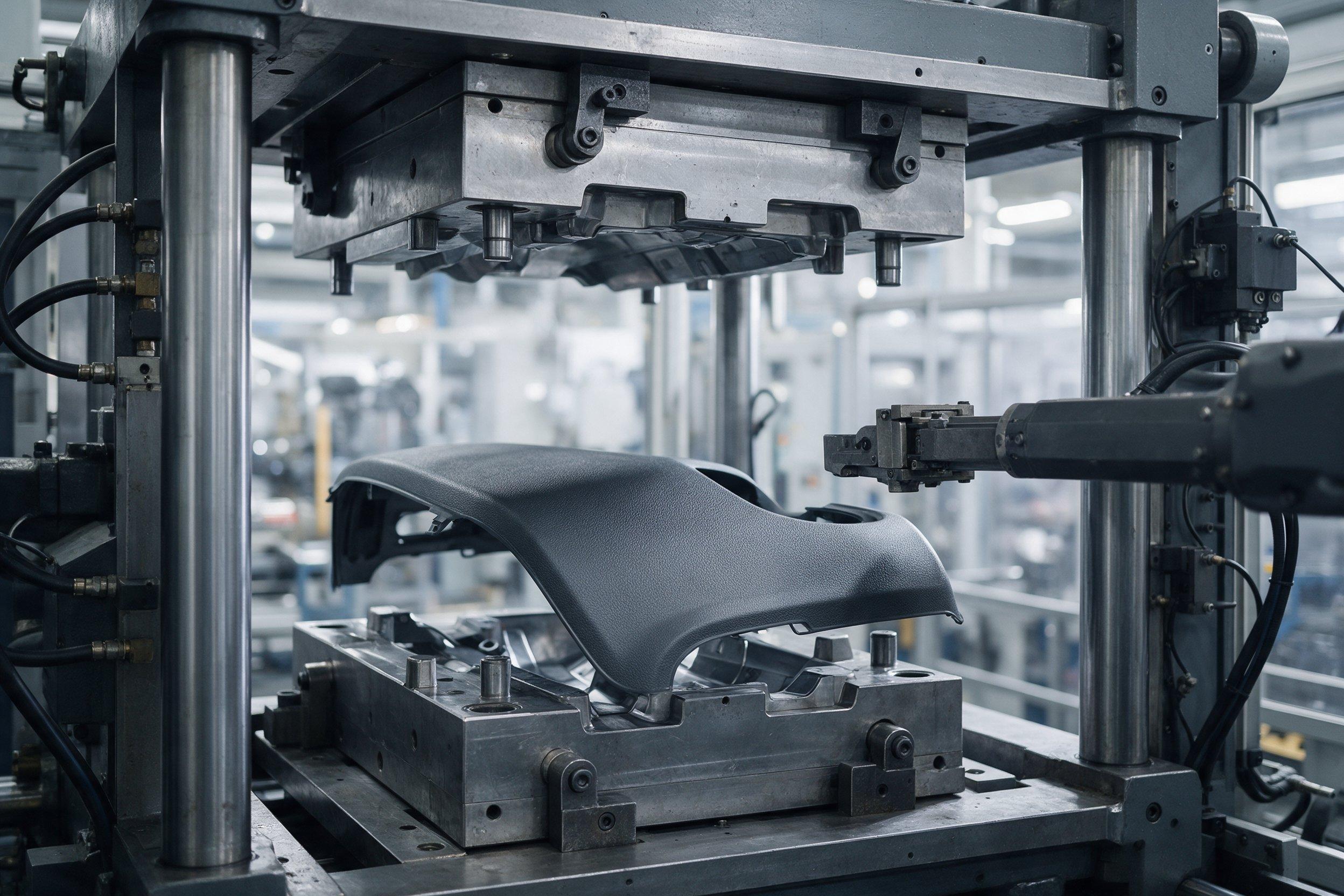
Injection Moulding
Injection moulding is also available within the group; send your part drawing for a quote.
Step 7
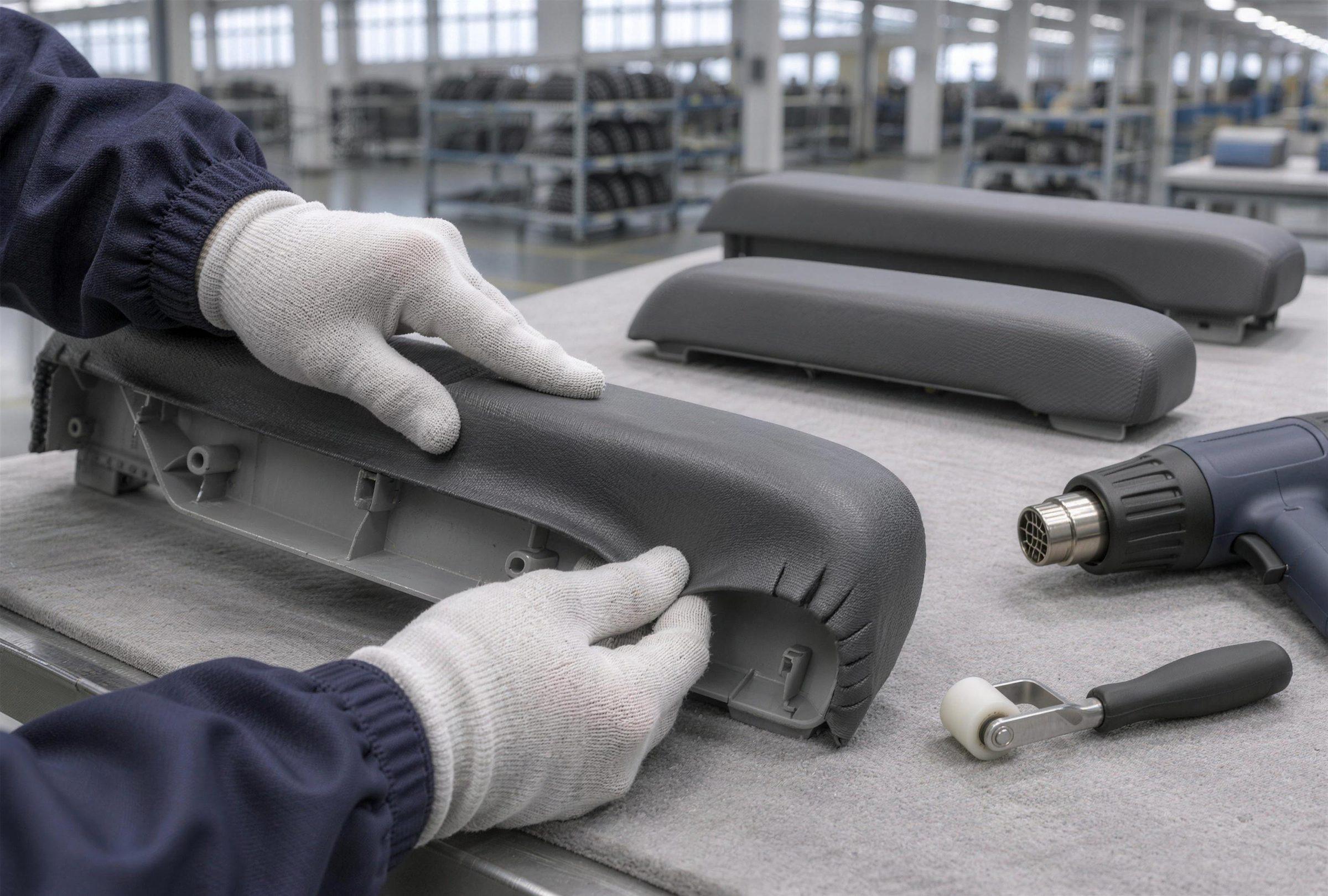
Wrapping
Moulded interior parts covered in PVC, PU or fabric within the group, so they arrive finished and ready to fit.
With injection moulding and our own fabric and PVC in the group, the moulded part, its cover material and the wrapping can come from one supplier.
Job work
Take the whole chain, or one step
Contact
Tell us the part and the volume
Jun Automotive India supplies seat trim covers and interior trim to vehicle makers and Tier-1 seat makers, with fabric and lamination from our own group.